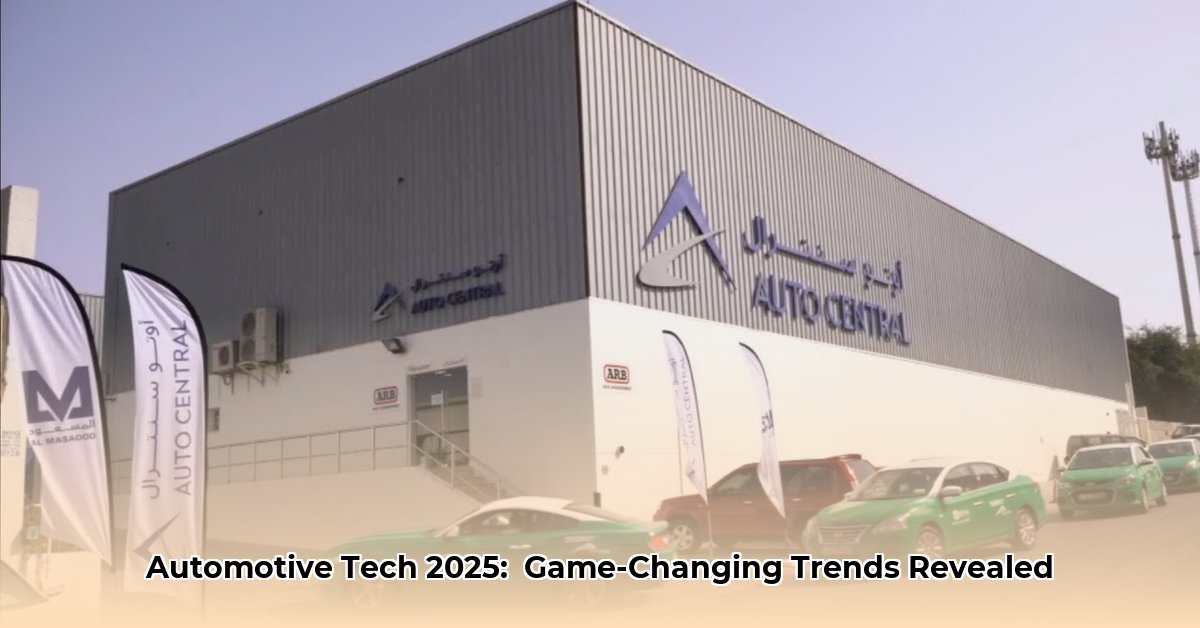
The automotive industry is undergoing a rapid transformation, driven by advancements in Advanced Driver-Assistance Systems (ADAS), artificial intelligence (AI)-powered consumer engagement, the expansion of the electric vehicle (EV) market, and a growing emphasis on ethical and sustainable manufacturing practices. This article analyzes these key trends, drawing on Autocentral's reporting, to provide actionable intelligence for various stakeholders.
Advanced Driver-Assistance Systems (ADAS): The Future of Driving
Advanced Driver-Assistance Systems (ADAS) are rapidly advancing, improving safety and efficiency across the automotive industry. Collaborations between companies like Hesai (lidar technology), Outsight (3D perception), and Embotech (software for autonomous driving) with major automakers such as BMW exemplify this trend. These partnerships are accelerating the integration of sophisticated sensor technologies and AI algorithms into vehicles, paving the way for more automated and safer driving experiences. This not only enhances consumer safety but also streamlines manufacturing processes and reduces production risks for manufacturers. How will this increased automation impact the future job market within the automotive industry?
AI-Driven Consumer Engagement: Revolutionizing the Dealership Experience
AI is reshaping the customer experience within dealerships. Autocentral's analysis of DAS Technology highlights four key features driving this transformation: personalized recommendations, proactive maintenance alerts, AI-powered chatbots for initial inquiries, and streamlined appointment scheduling. These features improve customer satisfaction and dealership efficiency. For dealerships, the quantifiable benefits include increased sales conversion rates, reduced customer service costs, and higher customer satisfaction scores (CSAT). But how can these improvements be definitively linked to a quantifiable increase in return on investment (ROI)?
Electric Vehicle (EV) Market Expansion: Navigating Global Opportunities
The global expansion of the EV market is undeniable. Mazda's recent launch of a plug-in hybrid electric vehicle (PHEV) in Indonesia underscores the immense potential of emerging markets. However, success in these markets requires addressing significant challenges, including the development of robust charging infrastructure, consumer education about EV technology, and the implementation of attractive government incentives. What strategic partnerships will be most effective in overcoming these challenges and expanding EV adoption globally?
Ethical and Sustainable Manufacturing: A Growing Imperative
The automotive industry is increasingly focused on ethical sourcing and manufacturing practices. Marelli’s SA8000 audits in China demonstrate that sustainability is not merely a public relations initiative, but a fundamental aspect of long-term business success. Consumers increasingly prioritize ethical and sustainable products, putting pressure on manufacturers to adopt responsible practices across their supply chains. What innovative sustainable practices are most cost-effective and impactful for manufacturers?
Actionable Intelligence: Strategic Recommendations for Stakeholders
Based on Autocentral's analysis, the following actionable insights are crucial for various stakeholders:
| Stakeholder | Short-Term Goals (Next 1-2 Years) | Long-Term Vision (3-5 Years and Beyond) |
|---|---|---|
| Car Manufacturers | Integrate advanced ADAS; explore PHEV/EV options; prioritize ethical sourcing and sustainable supply chains | Invest in fully autonomous vehicles; build AI-driven customer relationships; global expansion with a focus on sustainability and circular economy principles |
| Tech Companies | Enhance ADAS integration; develop better consumer data platforms; provide localized solutions for diverse global markets | Invest in next-gen ADAS and EV tech; forge strategic partnerships with manufacturers; explore innovative revenue models, such as data-driven services |
| Car Dealerships | Implement AI-powered customer engagement tools; adapt to changing customer preferences; enhance customer service through data-driven strategies | Create digital-first strategies; seamlessly integrate data into operations; explore new revenue streams from EV services and maintenance |
| Governments | Support EV adoption through incentives and infrastructure development; foster the development of autonomous driving technology; establish robust ethical manufacturing standards | Invest in AV infrastructure; promote collaboration between industry and academia; implement stricter regulations around data privacy and safety |
Navigating the Risks: Proactive Mitigation Strategies
The automotive industry faces several significant risks. A proactive approach to risk management is crucial:
| Technology/Trend | Risk Level | Potential Impact | Mitigation Strategies |
|---|---|---|---|
| Advanced ADAS Features | Medium | Safety issues; data breaches; liability concerns | Rigorous testing and validation; robust cybersecurity measures; clear liability frameworks; transparent data handling practices |
| AI-Powered Customer Tools | Low | Data privacy violations; algorithm bias | Strict adherence to data privacy regulations (e.g., GDPR, CCPA); development of unbiased algorithms; transparency in data usage |
| EV Market Growth | Medium | Supply chain disruptions; insufficient charging infrastructure; slower-than-expected adoption | Diversification of supply chains; investment in charging infrastructure development; effective marketing campaigns promoting the benefits of EVs |
Regional Variations and Regulatory Implications: A Global Perspective
The automotive landscape is far from uniform. Local market conditions and varying regulatory frameworks necessitate tailored strategies. Regulations concerning data privacy, autonomous vehicle safety, and emissions vary significantly across regions, requiring companies to adapt their approaches according to local requirements.
Conclusion: Shaping the Future of Automotive
The automotive industry stands at a pivotal juncture. By understanding and proactively addressing the trends discussed, stakeholders can navigate the challenges and capitalize on the immense opportunities presented by technological advancements and evolving consumer expectations. The future of the automotive industry will be defined by those who successfully integrate new technologies, prioritize ethical and sustainable practices, and adapt to the evolving regulatory landscape.